jeudi 1 janvier 2026

Bilan 2024

Oui oui, c'est bien le bilan 2024, juste un an de retard. L'avantage c'est que je peux revisiter mon baratin sur mes choix d'investissement de fin 2024, et voir ce que cela a donné en 2025.

Bilan PEA

Le PEA a fini l'année 2024 à +2%

Comparaison par rapport à mes blogs et et gérants favoris : Blog Value and Opportunity -2,5%, Fonds Indépendance et expansion -1%, HMG Découvertes +7%, Gay Lussac microcaps -3%. Le fonds géré par JF Delcaire sort clairement du lot, grâce à son exposition à des situations spéciales comme Compagnie du Cambodge ou EPC. On peut également noter que la version européenne de ces fonds fait généralement mieux que la version France.

Bien entendu par rapport au SP500 (+25%) c'est une catastrophe, le CAC small NR finit l'année à -7%, difficile de faire pire que la combinaison small cap + value + France (dissolution, instabilité...) en face des Magnificent Seven. Sur 2 ans la sous-performance par rapport au SP500 est douloureuse.

C'est très désagréable pour mon ego. Pour me consoler, j'ai investi en tracker SP500 sur d'autres supports (Plan Épargne retraite, etc...) et j'en ai mis un peu dans mon PEA ; c'est bête mais cela me permet de bien mieux gérer psychologiquement cette sous-performance.


Rappel des années précédentes :


Principales positions : Sicav monétaire éligible PEA (AXA PEA régularité) (14%), Odet (10%), Precia (8%), Gerard Perrier (6%), Neurones (6%).

Principales opérations : retrait obligatoire de SII et CIFE (qui s'appelle ETPO maintenant), encaissement du dividende exceptionnel et vente partielle d'Assystem (suite à la vente de sa participation dans Framatome). 

Achat de sicav monétaire (pas beaucoup d'inspiration début 2024), puis à partir de mi-2024 achat de Alten, Sword et Infotel, j'y reviendrai plus tard.

Bilan PME

Le PME finit à +1%.

Principales positions : Dekuple (ex ADL Partner) 15%, Groupe Guillin 15%, Wavestone 12%, Infotel 11%, Hitech Pros 10%.

Principales opérations : vente de SII (retrait obligatoire), vente partielle de Eurobio Scientific (apport partiel à l'OPA, on n'est pas passé loin du retrait obligatoire), allègement de DLSI. Achat de Wavestone et Infotel.

Pour DLSI ma décision a été guidée par le retour d'expérience sur CIFE dont je parlais en 2024, çàd un retour sur investissement minable après avoir patienté plus de 10 ans ; maintenant je suis moins patient pour une société même décotée si celle-ci est de faible qualité (ce qui est le cas de DLSI, moins rentable et plus petite que CRIT et SDG par exemple) et qu'il n'y a pas de catalyseur identifié (la famille Doudot ne donne aucun signe en ce sens). 

Commentaire

Pourquoi j'ai avoir acheté Alten et en trichant (en 2025, donc avec un an de retard...) est-ce que c'était une bonne décision ?

J'ai acheté Alten essentiellement pour son historique de croissance régulière, sa valorisation raisonnable et l'hypothèse qu'à moyen terme cette tendance devrait se poursuivre. 


Dans un contexte d'incertitude, les dépenses de R&D externalisées ont été coupées en 2025, et dans le cas d'Alten, le retournement brutal dans l'automobile (20% du CA) a lourdement pesé.

On peut illustrer cela avec Bertrandt AG, spécialisé dans ce secteur, qui a bien dégusté avec les constructeurs allemands.

Est-ce que c'était une bonne décision d'investir dans Alten en 2024 ?

Avec le recul, non puisque Alten  s'est ramassée de 50% par rapport mes premiers achats mi-2024, en cohérence avec la baisse des résultats

Ce qui était prévu début 2024, "une croissance organique satisfaisante" vs ce qui s'est passé en 2025 (estimation avec les dernières guidances)

Comment éviter de refaire la même erreur ?

Avec le temps, j'ai plus de respect pour le momentum, alors qu'initialement je n'en tenais aucun compte (influence Graham, Mr Market, etc...). Mr Market est parfois irrationel, mais dans le cas d'Alten il avait clairement mieux anticipé que moi le ralentissement qui s'annonçait. J'aurais du plus creuser les raisons pour lesquelles la valeur baissait fortement, surtout pour une valeur et un secteur largement suivis (on n'est pas sur une obscure small cap).

Je commence donc à tenir compte du momentum dans mes critères d'achat, voir par exemple cet exemple de value and opportunity sur une implémentation possible que j'ai plus ou moins copiée. 


samedi 28 septembre 2024

Bilan 2023

 Bilan PEA

 Ok je suis très très très en retard cette année.

Le PEA finit l'année 2023 à +12%, avec un un minium à -2% en octobre, je suis sauvé par le brutal rebond de fin d'année et l'OPA sur SII.

Comparaison par rapport à mes blogs et et gérants favoris : Blog Value and Opportunity 14%, Fonds Indépendance et expansion 12%, HMG Découvertes 8%, Gay Lussac microcaps 6% : ma perf est honnête.

En revanche par rapport aux grands indices (SP500 et CAC40 NR par exemple) c'est une nette sous-performance (les small caps sont une fois de plus délaissées cette année). Je suis également une fois de plus laissé dans la poussière par le blog Ratio Rating Ranking (+25%).

Rappel des années précédentes :

Principales positions : Odet (9%), Precia (8%), une sicav monétaire éligible PEA (AXA PEA régularité) (8%), SII (7%), Gerard Perrier (6%). 

Comme l'année dernière peu de mouvements. 

Principaux achats en 2023 : LDC, IPSOS, SII et SICAV monétaire (pour être éligible au PEA, cette sicav investit en actions et fait un "swap de performance" pour reproduire le taux monétaire. Un peu trop compliqué à mon goût mais pas le choix en PEA).

Principales ventes : Precia (un petit allègement en début d'année) et Gevelot (idem).

 Bilan PME

Pour le PME, on est à +13%.

Principales lignes : Groupe Guillin (14%), Adl Partner (nouveau nom Dekuple), 11%, HitechPros (10%), Infotel (9%), DLSI (8%).

Achats 2023 : Infotel, IT Link (renforcements), ESI Groupe (achat opportuniste avant l'OPA finalisée en 2024). Principales ventes : Manutan (OPRO par la famille Guichard)

 Commentaires

En fin d'année 2023 la société CIFE a annoncé une OPA simplifiée, suite à la cession par la famille majoritaire de ses parts au groupe Spie Batignolles. C'est la première action dont j'avais parlé dans le blog en février 2011, il y a maintenant presque 13 ans.

SII à également fait l'objet d'une OPA par l'actionnaire majoritaire, suivi d'un retrait obligatoire. J'avais parlé de SII en 2014 dans cet article.

Voilà l'occasion de comparer ces deux investissements, et d'essayer d'en tirer une leçon, en étant prudent sur la portée d'un seul exemple. Plus je passe de temps en bourse, moins j'ai des convictions définitives sur "la" bonne approche.

L'action CIFE était à 58 € en 2011 au moment de l'article, l'OPA se fait à environ 98 € par action (dividendes exceptionnels inclus). En tenant compte des dividendes encaissés, on arrive donc à une magnifique rentabilité de 3% par an, donc proche de 0 en tenant compte de l'inflation.

SII était à environ 4 € en 2014, l'offre est de 70 €. Avec les dividendes encaissés, on est à environ 37%  annualisés sur environ 9 ans ! Bien entendu, je n'ai pas réalisé cette performance (j'ai acheté au fur et à mesure, et j'ai stupidement allégé au lieu de ne pas y toucher) mais c'est quand même une belle plus-value.

En termes de coût d'opportunité, mon investissement dans CIFE m'a donc couté cher. Ma patience (certains diront l'entêtement) n'est donc pas récompensée, bien au contraire, 1ère leçon.

Évidement la conclusion est qu'il vaut mieux investir à long terme dans une société en croissance, que dans une société même très décotée, sauf si la décote est comblée rapidement. Un aspect totalement négligé dans mon analyse de l'époque.

 Un autre aspect était absent de mon analyse de CIFE: dans une société avec un capital entièrement contrôlé comme CIFE, l'actionnaire majoritaire peut avoir bien d'autres objectifs qu'une revalorisation à court terme, voir même l'opposé pour des raisons fiscales. 

Il peut généralement se rémunérer indépendamment de la valorisation du cours (dividendes mêmes modestes, salaires, postes d'administrateurs, loyers perçus sur la société, conventions réglementées dans certains cas), et/ou vouloir privilégier par exemple la pérennité ou la transmission de l'entreprise par rapport à l'optimisation à court (ou même à moyen terme) des capitaux engagés. On a vu que CIFE n'a jamais distribué significativement sa trésorerie excédentaire. Pire, les rachats d'actions ont été utilisés par l'actionnaire majoritaire pour se renforcer à bon prix (voir déclarations AMF).

Le contre pouvoir des actionnaires minoritaires ou d'éventuels concurrents (OPA hostile, fonds activiste) est très faible si le capital est entièrement contrôlé.

A contrario pour SII, et sans surprise la croissance à long terme a un impact énorme sur la valeur ; SII aurait pu être achetée bien plus cher que les 4€ et EV/ROP de 5x payés en 2014, et la performance aurait été néanmoins excellente.

Rétrospectivement mon prix d'achat état ridiculement faible, probablement le contre coup de la crise de 2008 et de la crise de l'euro en 2010-2012. On a donc eu un "double effet kiss cool" : croissance des résultats ET du multiple de valorisation. On a exactement le cas inverse quand une société de croissance descend brutalement de son piedestal.

A l'inverse de CIFE, SII a bénéficié d'une situation favorable: marché des services informatiques en croissance, fragmenté, et ou les petits acteurs peuvent croitre (pas de situation "winner takes all"). Je ne veux pas non plus minimiser le talent du management, qui a su accélérer cette croissance notamment à l'étranger et notamment en Pologne dans le cas de SII. 

 Bref mon explication commence à devenir laborieuse, mais il est clair que mon approche deep value à la Graham (on regarde principalement le bilan ou le prix de l'action par rapport à ses résultats passés, sans trop se soucier de la croissance qui de doutes manières est impossible à prévoir, ni de la qualité du management) a pas mal évolué. 

Je n'ai pas pourtant pas (encore) complètement basculé dans le camp "Warren Buffet" (buying wonderful companies at a fair price).

Je ne pense pas que SII avait en 2014 ou a maintenant des avantages concurrentiels par rapport à ses concurrents dans le secteur des ESN. Les sociétés comparables (je pense à Neurones) ont eu un parcours assez comparable, bien qu'avec une croissance moins spectaculaire. 

Je reste également sceptique sur la possibilité (ou en tout cas mes capacités) de prédire (façon Warren Buffet ou Munger, 100-baggers, etc...) une croissance à long terme, en analysant les critères qualitatifs biens connus ("moat", avantage concurrentiel durable, pricing power, secteur avec une grande visibilité sur la croissance future, etc...). 

Mais l'exemple de SII montre qu'on peut avoir un beau 10 bagger sans nécessairement trouver le prochain Coke, Apple ou LVMH

jeudi 11 mai 2023

Bilan 2022

Le bilan est très très tardif cette année !

Mon PEA finit l'année à -3% (dividendes et frais de transaction inclus, avant taxes), avec un minimum à -12% en octobre. 

2022 : -3%, 2021 : +26%, 2020 :+1%,  2019 : +16%, 2018: -11%, 2017: 20%, 2016: 22%, 2015: 15%, 2014: 11%, 2013: 35%, 2012: 15%, 2011:-1%, 2010:15%, 2009: 33% et perte de 40% en 2008

Le principales positions ont peu évolué (taux de rotation suivant définition AMF (achats+ventes)/moyenne portefeuille: 17%  ou 4 % suivant définition US min(achats;ventes)/moy portif.

Principales lignes : Odet (10%), Precia (9%), Gerard Perrier (6%), Neurones (5%), Gevelot (5%).

Ayant peu d'idées en début d'année 2022, j'ai principalement acheté Odet (voir bilan de l'année dernière, la situation n'a pas fondamentalement changé, la principale évolution étant la cession par Bolloré des activités de logistique. 

Après le début de la guerre en Ukraine, j'ai renforcé Malteries Franco Belges, qui avait beaucoup baissé.

J'ai également acheté M6, valorisation selon moi bradée, au gré des différents épisodes négatifs du feuilleton (échec de la fusion avec TF1, puis inquiétudes sur la perte de la fréquence TNT au profit de X. Niel, puis inquiétudes sur le ralentissement des dépenses publicitaires). Ce n'est pas une position que j'ai l'intention de conserver à très long terme, aucune croissance. Mais j'ai du mal à résister quand je vois la marge, le FCF et le dividende.

Principale cession (mais partielle, mon portefeuille tourne très peu) : Gevelot. Je commence à me lasser de la non-utilisation de la trésorerie surabondante, de l'absence de considération pour les minoritaires, et de l'absence de visibilité sur les ventes du secteur "oil and gas" qui semble la vache à lait du groupe.


Si je me compare par rapport à mes fonds favoris :

- Indépendance et expansion -9,5%

- HMG Découvertes part D 3,2%

- Gay Lussac Microcaps -17,8%


Côté PME, c'est moins bon (-7%). Principales lignes : Adl Partner (nouveau nom Dekuple) (12%), Hitechpros (11%), Groupe Guillin (9%) et DLSI (8%).

Il y a un an, j'avais misé sur DLSI : "Il me semble raisonnable de tabler sur un retour plus ou moins rapide aux résultats d'avant COVID. En tablant sur une marge de l'ordre de 4% et un CA de 200 m€, on arrive à des ratios de valorisation très faibles : 2x le ROP." 

Force est de constater que ce retour est plus lent que ses concurrents Synergie ou Crit. Le CA 2022 est quasi stable, dans un marché de l'interim en hausse de 10%, la communication du management inexistante en dehors des obligations réglementaires, la liquidité famélique ; bref une déception qui pèse sur la perf. La valorisation est toujours au plancher, je garde en attendant des jours meilleurs.


Mes principaux achats en 2022 : IT Link, une petite ESN. Un secteur qui a le vent dans le dos quand on voit la croissance insolente (et surtout régulière) des autres acteurs comme Neurones, SII, Aubay, Infotel, etc....). IT Link est faiblement valorisée mais il est vrai avec une croissance bien plus faible que les comparables (ci-dessous SII, que j'ai également en portefeuille ; c'est assez impressionnant).


Plus globalement  mes bonnes résolutions de l'année dernière étaient de me tourner plus largement vers la gestion indicielle et les fonds d'investissement. J'ai bien entendu très modérément respecté ces bonnes résolutions :

- achat de quelques parts des fonds cités plus haut à l'automne 2022, j'ai notamment profité de la réouverture des souscriptions de Gay Lussac Microcaps

- achat de tracker MSCI Emerging markets, en me bouchant le nez devant les principales positions (TSMC à Taiwan, Tencent en Chine, Samsung, Alibaba...) bref que des sociétés technologiques à la mode et par dessus le marché souvent en Chine, pays dont je ne suis pas sûr que le respect des investisseurs individuels Français soit la priorité...bref à l'opposé total de mes convictions

- achat de tracker SP500, puisque mon constat de l'année dernière était que je n'arrivais pas à battre sur le long terme. Mais le naturel revenant au galop, je n'arrive pas à acheter sans tenir compte de la valorisation. 

Il est assez édifiant de voir les messages assez contradictoires qu'on trouve sur des sites pourtant très sérieux (?) :

- Andrew Smithers, q-ratio et CAPE (= un PER moyenné sur 10 ans, popularisé par l'universitaire Robert Shiller ;  son livre "Irrational Exuberance" est très intéressant); donc message = un SP500 surévalué qui devrait baisser de 40% pour retrouver sa"fair value" (correspondant à la moyenne long terme)


- JP Morgan Guide to the markets 4Q 2022: le marché est sous-évalué fin 2022, en utilisant le même indicateur !


 Bref il y a de quoi y perdre son latin* et c'est un exercice probablement futile. 

Je reprendrai du SP500 quand le marché américain daignera baisser vraiment. Je m'attendais à un retour sur terre bien plus brutal pour les stars déchues comme Tesla ou le Bitcoin, je suis très surpris. D'autre part les variations de change €/$ ont été assez brutales en 2022.

Je me retrouve à faire exactement ce qu'il ne faut pas faire, çad faire du market timing sur un indice.

En attendant je me retrouve avec pas mal de liquidités, parquées sur des fonds monétaires qui rapportent heureusement un plus qu'avant.

Je m'abstiendrais donc de toutes bonnes résolutions pour 2023 !

* en y regardant de plus près, JP Morgan compare le CAPE à sa moyenne sur les 25 dernières années, alors que le site de A. Smithers la moyenne est faite sur ~120 ans...

mercredi 12 janvier 2022

Bilan 2021

Bilan 2021

Mon PEA finit l'année à +26% (dividendes et frais de transaction inclus, avant taxes).
 
Dans l'absolu il s'agit d'une bonne performance, en relatif ce n'est pas spécialement brillant notamment par rapport aux indices ou aux fonds que je suis, et ce pour la deuxième année de suite.

Cette année je passe donc plus de temps à analyser mes performances relatives sur une longue période.


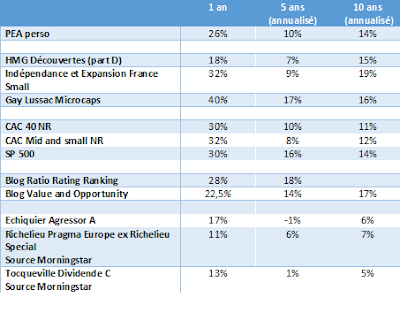
La collecte des données et le calcul des performances annualisées sont faits à la main, merci de me signaler d'éventuelles erreurs.

Je précise que je calcule ma performance annuelle avec la fonction TRI.PAIEMENTS d'Excel (XIRR en anglais) pour tenir compte des apports et la performance annualisée avec la moyenne géométrique des perfs annuelles.
 
 Sur 5 ans je pense que ma relative sous performance reflète celui de la "value", largement battu par les valeurs de croissance sur ces dernières années. Les petites capitalisations font également moins bien que les large cap sur cette période (alors que c'est habituellement le contraire).

Si on regarde la perf annualisée sur 10 ans, mes performances sont honorables, sans plus :

- à égalité avec le SP500 (vive la gestion indicielle),

- inférieures aux fonds que j'apprécie (HMG Finance, Indépendance et Expansion, Gay-Lussac Gestion) et que suis régulièrement, opérant dans le même univers d'investissement et avec un style que j'estime comparable (orientation plus "growth" pour Gay Lussac Microcaps). Les fonds supportent pourtant des contraintes bien plus fortes qu'un particulier (frais d'entrée, de sortie, éventuelles commissions de mouvement, de superformance...) ainsi que des contraintes de liquidité (il faut pouvoir rembourser certains clients qui paniquent pendant les phases de baisses et les flux de souscription se tarissent au mauvais moment).

- J'ai également indiqué les perfs de certains des blogs que je suis depuis longtemps (Value and Opportunity, Ratio Rating Ranking), en tous cas ceux pour lesquels j'ai pu trouver facilement trouver un track record assez long

Enfin, j'indique les perfs de 3 fonds que j'ai achetés (et plus ou moins oubliés) dans un contrat d'assurance vie. Je préfère ne pas faire de commentaires désobligeants. Il est vrai que c'est probablement de ma faute : à l'époque j'avais probablement choisi ces fonds en sélectionnant les plus performants sur une période récente. Je n'avais pas encore pleinement compris le sens profond (il faut en faire l'expérience directe) de l'avertissement "les performances passées ne préjugent pas des performances futures".


Quelle leçon en tirer ?

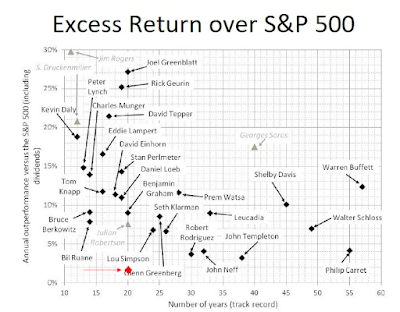
Si je remonte encore plus loin (20 ans), ma perf est de 11,2% par an vs 9,5% annualisés pour le SP500 (si je ne me suis pas trompé : source )

Sur ce graphique, je me situe donc ici:


Il est donc clair, au cas où il me serait resté quelques illusions, que je ne suis pas Warren Buffet !

Pour me consoler, je ne suis pas le seul, voir les statistiques de S&P sur 10 ans :  80% des fonds sont sous le SP500 aux US, et en Europe 85% sous performent le SP350).

D'un autre côté, il me semble hasardeux d'extrapoler les performances récentes des indices, tirés par quelques valeurs de croissance "star" et notamment les GAFAM ou les valeurs de luxe en France. Il me semble qu'il y a peut être une analogie avec les "nifty-fifty" des années 1960-70, période régulièrement évoquée par Howard Marks dans ses livres.


Principales positions du PEA

Elles ont peu évolué, le taux de rotation de mon portefeuille étant de 16%* cette année. Les liquidités restent élevées : 16% en cette fin d'année, ce qui affecte bien sûr la performance.

* j'ai pris la définition de l'AMF : somme des achats et ventes d'actions / actif moyen (en l'absence d'apports ou de retraits). Bizarrement la définition trouvée sur les sites US est assez différente : min (achat;ventes)/ actif moyen ; ce n'est pas du tout la même chose !

Je n'ai pratiquement pas touché aux principales lignes depuis l'année dernière (Precia, Gerard Perrier, Installux, Gevelot, Neurones...).

La principale évolution concerne l'apparition d'une ligne significative de Odet, une des holdings de la galaxie Bolloré.

Cette thèse d'investissement a fait l'objet de nombreuses présentations, bien meilleures que celles que je pourrais faire par moi-même (liste probablement non exhaustive) :

- en 2015 par Muddy Waters : ici

- en 2016 par Greenwood Investors, en video

- en 2017 par East 72 : ici (à partir de la page 11)

- en 2019 par Bireme Capital : ici, et en 2021 : ici

- en 2021 en Français sur l'excellent blog valeurbourse, en 3 épisodes : ep. 1, 2 et 3

- et sur twitter par de nombreux comptes qui méritent le suivi : @AsduKreno, un résumé très synthétique par @ni_ru_san, @FoxCastlehold, @LuchesiPhilippe et un résumé en un seul graphique par Modern Major Generalist p fgs://twitter.com/A sduKreno/status/1473252848465022981?s=20ps://twitter.com/AsduKreno/status/1473252848465022981?s=20

Si je cherche des points négatifs :

- ce n'est pas vraiment une position contrariante

-  c'est une situation relativement compliquée (somme des parties, boucles d'autocontrôle, différents scénarios possibles)

- il y a des incertitudes autour du timing de l'opération et son dénouement ; c'est peut être du wishful thinking de penser que la galaxie et les détentions croisées vont être simplifiées en 2022 à l'occasion du départ à la retraite annoncé de V. Bolloré.

Quoi qu'il en soit je ne trouve pas d'opportunités avec un rapport bénéfice / risque comparable en ce moment, d'où mon renforcement.


Principales positions du PEA-PME

 Là encore peu d'évolution dans les positions principales : Groupe Guillin (ALGIL), Hitechpros (ALHIT) , ADL Partner (DEKUPL), Aubay, Infotel.  

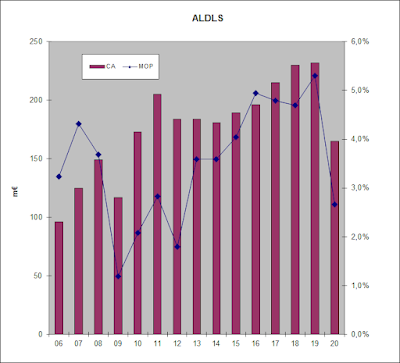
Je n'ai pas touché aux positions de l'année dernière mais j'ai renforcé la société d'interim DLSI (ticker : ALDLS), ce qui pèse je pense sur la performance de cette année (+23%).

DLSI est une société d’intérim, principalement présente dans l'est de la France, le Luxembourg et la Suisse. 

Au cours actuel (dans les 13 €), j'estime la valeur d'entreprise à 17 M€ environ, en tenant compte des retraitements suivants :

- dettes financières corrigées des dettes de location (liées à IFRS16*), j'ai utilisé les chiffres de fin 2020 car le détail n'est pas donné dans le rapport semestriel

- trésorerie augmentée du CICE mobilisable (9,6 M€ fin 2020, §6.1.2 du rapport annuel, probablement moins au S1'21)

 *j'ai trouvé relativement peu d'articles assez simples (pour moi) concernant l'impact de l'IFRS16 alors que cela me semble un point important. J'ai trouvé cet article intéressant, le blog semble malheureusement inactif depuis qqs mois. J'ai également noté que dans les notes d'opérations de retrait récentes, les experts "indépendants" semblent faire les mêmes retraitements.

Les résultats ont été impactés par le COVID. Sur les 9 premiers mois de 2021, le CA se redresse rapidement mais est encore en baisse de 15% par rapport à 2019. 

Il me semble raisonnable de tabler sur un retour plus ou moins rapide aux résultats d'avant COVID. En tablant sur une marge de l'odre de 4% et un CA de 200 m€, on arrive à des ratios de valorisation très faibles : 2x le ROP.


Les raisons de cette sous valorisation sont je suppose :

- l'impact du COVID, redressement assez lent surtout dans le BTP. L'activité au Luxembourg ou en Suisse, ou encore dans le nucléaire où opère DLSI semble se redresser plus rapidement.

- la très faible liquidité, probablement insuffisante pour un fonds

- une taille, une rentabilité et une croissance inférieures aux comparables Groupe Crit ou Synergie.

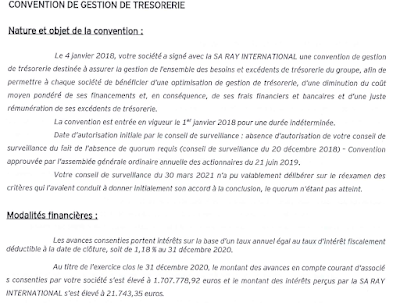
Un point qui ne me paraît pas clair est la dette envers la holding de la famille Ray International (4,8 M€ fin 2020, sauf erreur de ma part elle est bien comptée dans les dettes financières). Je n'arrive pas à réconcilier cette dette avec ce qui est décrit dans les conventions réglementées.


Perspectives

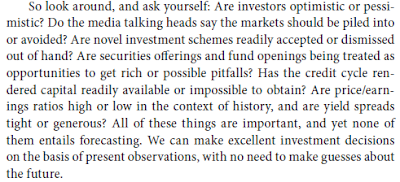
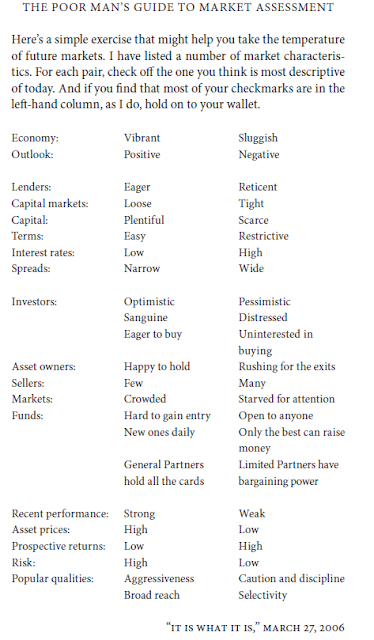
Je ne me hasarderais pas à faire de prédictions pour l'année prochaine, mais si je reprends la checklist de Howard Marks tiré de son livre "the most important thing" pour essayer de prendre la température actuelle du marché :


Pour moi on coche beaucoup de cases dans la colonne de gauche (l’atmosphère ayant peut être un peu changé depuis le début d'année) :

- records de valorisation, d'introductions, SPACs, de levées de fonds par ex pour les "licornes" de la "French-Tech"

- climat spéculatif autour des cryptomonnaies, NFT, etc.... La société Crypto Blokchain (ALCBI) introduite à 2 € fin 2021, est montée à 80 € en qqs séances !

- investisseurs en mode "FOMO" (fear of missing out)

Conclusion et bonnes résolutions

Malgré ma relative sous-performance, je n'ai pas l'intention de faire de grands changements, et en particulier je ne vais pas abandonner la gestion en direct pour les raisons suivantes : 

- c'est un hobby plutôt passionnant, qui permet de réfléchir et surtout de faire l'expérience du rapport à l'incertitude, au risque, aux biais cognitifs, à sa propre personnalité.

- j'espère progresser* et améliorer mes performances, notamment en ayant un portefeuille plus concentré (j'ai une fâcheuse tendance à multiplier le nombre de lignes de mon portefeuille, en cherchant toujours la prochaine "pépite")

En revanche il me semble plus prudent de ne pas être trop confiant et de ne pas m'illusionner sur mes talents d'investisseur. Mes futurs flux d'épargne seront donc orientés vers à la gestion indicielle et vers des fonds d'investissement, sachant qu'il y a de quoi être désorienté devant l'abondance de trackers et d'indices disponibles.

* Sur ce sujet, je veux faire un peu de pub pour Finance Académie, qui est tenu par Philippe. Ses vidéos et ses conférences valent vraiment le coup, et couvrent des sujets que je n'avais jamais vu traités ailleurs auparavant.

samedi 2 janvier 2021

Bilan 2020

Performance 2020

Mon portefeuille principal (PEA) finit 2020 à peu près stable (+1 % environ). Le PEA-PME fait beaucoup mieux (+70%) mais j'ai fait des versements significatifs cette année sur ce portefeuille, donc le TRI donne une idée plus juste : +25%. Malheureusement pour moi le deuxième portefeuille pèse seulement 1/4 du premier...

Performances historiques (du PEA), donné en TRI annuel pour corriger des apports :

2019 : +16% 2018: -11%, 2017: 20%, 2016: 22%, 2015: 15%, 2014: 11%, 2013: 35%, 2012: 15%, 2011:-1%, 2010:15%, 2009: 33% et perte de 40% en 2008.

Depuis l'ouverture du PEA la perf annualisée (=TRI depuis l'ouverture) est de 10%.

"Benchmark" (sauf erreur de ma part, les chiffres définitifs n'étant pas sortis pour tous les fonds concernés) :

- Cac mid and small NR (indice réinvesti) 0%

- Indépendance et Expansion France Small +10%

- HMG Découvertes +5,5%

- j'ai rajouté dans mon panel un fonds intéressant avec un profil "croissance" plus marqué : Raymond James Small Caps +10% ou Raymond James Micro Caps +21,5% !

Globalement le bilan 2020 du PEA n'est donc pas fameux, j'essaie plus bas d'identifier d'éventuelles raisons et pistes d'amélioration.

L'année a été mouvementée ; j'ai plutôt bénéficié de la dégringolade du printemps, ayant pas mal de liquidités en début d'année (33%), mais j'ai été surpris par la violence et la rapidité de la remontée et le krach à la hausse lors de l'annonce du vaccin par exemple. J'ai trop hésité (pensant avoir plus de temps pour rentrer progressivement) et, comme lors des dernières crises, manqué "d'agressivité" pour saisir les opportunités intéressantes qui se sont présentées.

Par rapport à un indice comme le SP500 (+16%) et par rapport aux valeurs techno américaines en particulier c'est encore plus mauvais. La sous-performance de la "value" en général est analysée par exemple dans cette lettre T3 2020 GMO ici).

Il est tentant pendant ces périodes de sous-performance relative de laisser tomber "sa" méthode d'investissement et se tourner vers des achats plus spéculatifs (pourquoi se fatiguer alors qu'on a des perfs bien meilleures avec un tracker SP500 ? Une solution est peut être de garder le PEA et le PEA-PME pour les titres vifs et d'ouvrir en // un contrat d'assurance vie avec des trackers.

Principales positions

5 premières lignes du PEA (pondération/perf 2020 et commentaire éventuel)

- Precia (10%/+10%)

- Gevelot (8%/-18%, l'année 2020 sera probablement mauvaise à cause de la réduction des investissements pétroliers, mais valorisée seulement 3x le ROP 19)

- Gerard Perrier (7%/+9%)

- Installux (7%/-1%)

- Neurones (4%/+14%)

Cash 17%, et beaucoup trop de petites lignes (plus de 50 au total).

Gevelot et Installux pèsent donc sur la perf de cette année ainsi que probablement le poids cumulé des lignes des caisses régionales du crédit agricole (qui ont baissé de 25 à 30%).

Principales évolutions depuis fin 2019 : le poids de la ligne Neurones a beaucoup augmenté. Choix guidé par compromis entre la valorisation relativement faible et la qualité (solidité du bilan, résilience des résultats notamment en cette période de COVID, croissance modérée mais croissance quand même). 

Pas mal de changements également  au-delà de ces positions principales. Par exemple mes 5ème et 6èmes lignes sont maintenant groupe M6 et Total, principalement des achats opportunistes pour bénéficier des valorisations atteintes pendant la crise (vers 9 € M6 état valorisée à 6x ROP 19 et 5x le ROP moyen des 15 dernières années. Certes le COVID a affecté les dépenses de publicité, mais est-ce que c'est définitif ?). J'ai également pas mal renforcé Financière de l'Odet pour miser sur la simplification annoncée de la galaxie Bolloré.

5 premières lignes du  PEA-PME (pondération)

- HiTecPros (11%)

- Groupe Guillin (11%)

- ADL Partner (6 %)

- Infotel (6%)

- Aubay (5%)

Cash : 16%

Perspectives

Je suis surpris par le comportement des marchés US et l'envolée de certaines valorisations. 

source : Credit Bubble stocks 

Je pense que cela va mal finir, mais cela n'intervient pas dans mes décisions d'investissement (trop subjectif, et je n'ai pas l'estomac ni les compétences pour me lancer dans la vente à découvert).

Achats récents

Je n'ai pas de convictions fortes en ce début d'année. J'ai initié une ligne sur ELIOR, le groupe de restauration collective. Évidemment 2020 est très mauvais et 2021 ne sera pas brillant mais je mise simplement sur un retour à la normale à moyen-long terme.

 Conclusions

Je n'arrive pas à tirer de conclusions fortes à l'issue de ce bilan, en termes de modification de méthode de "stock picking". Je vois 2 axes d'amélioration : 

- trouver une méthode qui me convienne pour le money management/ ajuster la tailles des lignes. Je connais le critère de Kelly, mais je ne vois pas comment le mettre en oeuvre concrètement. D'autre part c'est un critère calculé pour optimiser la croissance d'un portefeuille en ajustant la mise de "paris" successifs quand les probabilités et les gains sont connus; dans les faits on ne connait ni l'un ni l'autre à l'avance

- faire en // de mes comptes gérés en direct de l'indiciel sur le SP500 (sur support assurance vie) pour diversifier et minimiser mes regrets pendant mes périodes des sous-performance !

mercredi 2 janvier 2019

2018 review

My portfolio is down 11% in 2018 (incl dividends).

Past years :(2017: 20%, 2016: 22%, 2015: 15%, 2014: 11%, 2013: 35%, 2012: 15%, 2011:-1%, 2010:15%, 2009: 33% largest loss -40% in 2008

Benchmark:
HMG Finances Découvertes down ~20%
Independance et expansion -32%
sextant pea -20%
- cac mid&small -23%

I've been somewhat protected from the general underpeformance of French small caps by a large cash position (I was finding everything too expensive last year), but it's still painful. My cash position is still about 30% end 2018.

The positive aspect is that the market is less boring now, with more opportunities (some details below).


Main holdings end 2018 are close to end 2017

Precia (PREC) (-20%)
Makes industrial scales and associated services (calibration...). The business is slowly expanding its operations and making small acquisitions. Down ~20% for no particular reason.

Gevelot (ALGEV) (-10%)
See my original blog article here.
The auto parts manufacturing branch has been sold last year, what remains is the pump business, currently priced at a negative EV (market cap is 137 m€ for a net cash of 165 m€).


However end 2017 there is a 65 m€ in "advances received from customers" in the balance sheet that I don't understand (why such large advance payments ?) and maybe should be deducted from net cash. Taking into account this correction, a 9% "historical" median margin on 90 m€ sales, the valuation is still low EV/EBIT ~ 3.
The management has announced "thinking about potential diversifications" and there was some modest share buyback. No special dividend though, and no illusions about management attitude with minority investors,

Installux (STAL) (-25%)
See "value and opportunity" article here, or "back of the enveloppe investing" article here. Assuming a 10% decrease in results (latest guidance), EV/EBIT  ~ 5 at current price.


Tessi (TES) (-37%)
See original article here.
In 2018 the "gold" branch CPROr was sold to Loomis, however the transaction was only approved by the authorities last week so will not be finalized in 2018 accounts apparently the sale was completed dec 31.

2018 HY accounts were relatively surprising (for me) : net debt  went from -15 m€ end 2016, to 34 m€ end 2017 and 126 m€ mid-2018. Lots of acquisitions, accounting movements due to the CPROr sale (large part of cash was reclassified in assets to be sold).

I've sold part of my position after HY results, waiting for the dust to settle to reconsider.
Some legal issues on the horizon end 2018 (60 Tessi employees working as subcontractors to an insurance company called CNP want their contract to be requalified  as direct employees of CNP ; they are suing both Tessi and CNP ; what will be the impact on business ?)
Probably the largest negative impact on my portfolio this year.


Malteries Franco-Belges (MALT) (+13%)
Micro-cap, malt for beer brewing, French and East-european markets. I was writing end 2017 that "It is likely that the main shareholder (Groupe Soufflet) will buy out minority investors at some time" and it did happen a few weeks ago, at around 11x2018 EBIT. Not a very generous offer, but the stock will probably be delisted in 2019.


Gerard Perrier (PERR) (-12%)
Industrial automation, nuclear sector
See article here.
Still reasonably valued (around 10xEBIT)


SII (SII) (-17%)
See my blog article here. I was writing end 2017 : "No longer cheap , I'm beginning to get nervous after the stock price increase, but good recent results and growth make me reluctant to sell. When should a stock like this should be sold ? When reaching unreasonable valuations ? When results start to degrade ?"
Finally I sold some around 25 € this spring, should have sold more...
Results are quite good, and valuation still reasonable.


New buys and companies/sectors under watch

Some sectors have been devastated this year and look currently very cheap (based on last year results) :

- auto parts manufacturers (Valeo -60%, Faurecia -53%, Plastic Omnium -50%, Plastivaloire -55%)
I guess that the market anticipates a recession for these cyclical companies, some defavorable impact of the transition to electrical vehicles (much less parts), and the impact of trade wars ("Trump" effect).
I've cautiously started to buy some shares of Akwell.

The company ticks a list of negative aspects :
- specialized in equipement for fluid management in cars (air, fuel, coolant,...) : likely to be impacted if there is a strong switch towards electric vehicles. I don't see that happening very quickly, but I may be mistaken. Some electric batteries need to be cooled anyway.
- manufactures Adblue systems (an additive to reduce emissions of diesel engines). Diesel cars have a bad environnemental image now and some models have been banned from some towns in Europe. However trucks will continue to use these systems for a long time I think
- opened recently a plant in Mexico to follow its  customers operating in the US market ; likely to be impacted by a trade war
- and finally a recent announcement of a provision for some quality problem in parts

The stock currently trades at 4x2017 EBIT ( and 10x the average EBIT of the last 13 years). I think the safety margin is sufficient, but I'm staying very cautious at this stage.


I've also started to buy some shares of Boiron (see value and opportunity article here)
In 2018, there has been numerous articles and official criticisms (along the lines : no scientific proof of efficency compared to placebo effect) about homeopathy in France, with persistant rumors about social security stopping reimbursement.
This may impact Boiron sales (about 40% of revenue if I understand correctly) but  I think that "believers" will continue to buy nonetheless (the pills are quite inexpensive anyway).


- temporary staffing sector  (groupe crit : -30%, synergie -50%, groupe dlsi -35%) : they all trade at 3 to 4 times 2017 EBIT. The market anticipates a recession, and maybe the impact of some French fiscal changes.

- housing (promoters and indivual home construction) : Maisons France Confort (MFC), AST groupe (ASP),... same story a strong contraction seems to be anticipated by the market.

For net-net amateurs, Passat (PSAT), Exacompta (EXAC), Signaux Girod (GIRO) trade under their net current asset value.


Best wishes !

dimanche 7 janvier 2018

2017 review

Yes, I'm still alive.
The blog reflects my portfolio activity...I currently find few investment opportunities fitting my criteria (cheap valuations and reasonable quality companies), so I do nothing.
I've mainly trimmed down some positions, and I'm now around 17% cash.

My portfolio is up 20% in 2017 (incl dividends), carried by the rising tide of valuations.
(2016: 22% ; 2015: 15% ; 2014: 11%, 2013: 35%. I should maybe mention a whooping -40% in 2008)

Benchmark:
- HMG Finances Découvertes ~17 %
- Independance et expansion ~27%
- sextant pea ~14%
- cac mid&small ~20%

Main holdings end 2017 are almost identical to end 2016

Precia (PREC)
Makes industrial scales and associated services (calibration...). The business is slowly expanding its operations and making small acquisitions. Still reasonably valued, should benefit from improving French economy.

Tessi (TES)
See original article here. Still reasonably valued.

Installux (STAL)
See value and opportunity article here. Still reasonably valued.

Gevelot (ALGEV)
See my original blog article here. Interestingly the auto parts manufacturing branch has been sold this year, at around 0.8 price to book value. What remains is the pump business, which historically has been more profitable, requiring lower maintenance CAPEX, and a large pile of cash. What  management (indifferent to minority shareholders) will do with this cash remains the central issue.

Gerard Perrier (PERR)
Industrial automation, nuclear sector.
See article here.
Still reasonably valued


SII (SII)
See my blog article here. No longer cheap , I'm beginning to get nervous after the stock price increase, but good recent results and growth make me reluctant to sell. When should a stock like this should be sold ? When reaching unreasonable valuations ? When results start to degrade ? 


IGE+XAO (IGE)
See article here. Some funds have stated that the price offered by Schneider is too low and are betting on an improved tender offer.

CIFE (INFE)
Constuction sector, in France and overseas territories. One of the 1st stocks I bought a decade ago. It was a net-net then, it is still very cheap now. All the markings of a value trap, 2017 results rather bad but does not burn cash. Large cash cushion. Value investing may involve patience but in this case it is rather extreme. Time will tell (maybe).

Malteries Franco-Belges (MALT)
Micro-cap, malt for beer brewing, French and East-european markets. Used to be extremely cheap (taking into account unconsolidated results from the east-european factories), still reasonnably valued now. It is likely that the main shareholder (Groupe Soufflet) will buy out minority investors at some time. Very illiquid stock.

Best wishes !

mardi 27 décembre 2016

2016 Review

Well 2016 is not finished yet but I do have some free time now.
My portfolio is up 22% vs 15% in 2015 (11% in 2014 and 35 % in 2013) (internal rate of return, including dividends and broker fees).

Benchmarks:
- the mid&small caps index (MS190) is up ~6 %
- my favorite investment funds with the same universe (value, small caps)
- Amiral Gestion Sextant PEA up ~19 %
- HMG Decouvertes up ~20 %
- Moneta micro entreprises up ~11%
- Independance et expansion up ~27%. Noteworthy : the fund may be closed to new subscriptions next year to limit its size.

A good performance, mainly linked to my investment universe rather than my stock picking skills I fear. The downside is that I find fewer and fewer investment ideas.

My biggest positions end 2016 are very close to my largest end 2015 lines:
Tessi. The founding family sold its majority stake mid 2015 at 132 €/share to the Dentressangle family.  A tender offer will be made at the same price early 2016. The stock is currently around 150€ and valuation is still reasonable. I don't intend to sell my shares.

Precia. Makes industrial scales and associated services (calibration...). The business is slowly expanding its operations and making small acquisitions.Still reasonably valued.


Installux (recently discussed here on a Swedish blog)

Gerard Perrier (industrial automation, nuclear sector, should benefit from EDF "Grand carenage" program = major maintenance and upgrade of power plants to extend their lifetime).

Gevelot (auto parts, pumps). Flat this year, suffers from downturn in oil sector. Very cheap (around 3x EBIT) but management seems firmly decided NOT to return excess cash to shareholders.

Tops
SII. Up 74% this year after 70% in 2015. Textbook revaluation (from low earnings/low multiple to higher earnings/higher multiple, Mr Market loves growth).
DLSI (interim staffing, comparable to Group Crit but smaller company). Up 80% this year, economic situation slowly improving and construction/building sector in better shape, benefits also from tax rebate for low salaries (CICE).

Flops
ITS Group (IT services). To make a long story short, I was assuming that after a major acquisition in 2013 profitability would be restored at the level of comparable companies. Apparently takes much longer than I anticipated based on management announcements.

Rallye group (holding company of supermarket chain Casino, operating in France and Latin America). I was lured by the juicy dividend, got hammered after Muddy waters shorted the stock (link). Too complex for me to be really sure of myself, sold some at a loss to reduce psychological stress to manageable level. Not so convinced about Muddy waters thesis though.

Best wishes and hope to write more next year.

mercredi 24 février 2016

Credit Agricole Regional Banks

May 07 update
The AMF has decided (April 06) that a tender offer is not mandatory and made an answer to CCI holders : link (in French, no official translation available).

Some points of interest (rough/simplified translation from legal French, difficult for me):
- the principle of equality between shareholders is a structuring principle but not an absolute law, especially for CCI which are not shares but titles without voting rights
- the AMF judges that the operation will not adversely impact the liquidity or the dividends of the CCI, the regional banks stated that their results would be better in 2019 and the dividend distribution rate would not be reduced

Independent experts (Cabinet Ledouble, Duff&Phelps, Accuracy) have estimated that the transaction is fair. Strangely enough their reports are not available on the AMF website, which is usually the case.

In the last paragraph, the AMF makes an allusion to the next move made by Colette Neuville from the ADAM: sue the regional banks (see article here, in French).
Apparently the angle of attack is : CCI holders are entitled for a share of the net assets upon liquidation of the company, CCI are emitted for the lifetime of the company, and the lifetime of the company is unlimited. Basically the argument is that such an unlimited contract is illegal.

The ADAM will 1st make a formal request to the banks to buy out CCI shareholders who request it, then sue each regional bank if necessary.
The ADAM offers to small individual investors to do it for them, in exchange of a small fee to cover expenses.
I'm not competent to judge the chance of success but it's a situation with little to lose and a 3 bagger in case of success.


March 29 update

Latest news from ADAM argumentation: see article here (in French). Besides they encourage individual shareholders to directly contact the AMF which I've done.


Intro

If you screen the French stock exchange, you've probably stumbled on the Caisses Regionales du Credit Agricole. There's about a dozen of them (tickers : CRAP (!), CCN, CRTO, CNF, CAF, and so on...).
They trade at ridiculously low P/B and low P/E ratios.
I've owned some shares for several years now.

They're currently under the spotlight because Credit Agricole intends to "simplify" its structure ; however this simplification is also the occasion to shaft minority shareholders, as I'll try to explain.
I don't know what can be done about it, but I'll try to summarize current local events for non French-speaking investors.


For a general introduction to these banks and the investment thesis, see this article (page 54) by Paul Issac of Arbiter Partners in the spring 2013 edition of the Graham and Doddsville newsletter. I'll rely heavily on this article. It'll save me time and be clearer than my own dubious english.


Relationship between Credit Agricole Regional banks and Credit Agricole SA
Current structure:


From the Graham and Doddsville article:
The regional banks collectively own all of a holding company called Rue La Boétie, which owns 56% of the listed Crédit Agricole vehicle, which in turn controls their foreign holdings, the insurance
companies, the asset management division, and about 25% of each of the regional banks.


added personal note : Crédit Agricole vehicle, which also gets involved in all kinds of things big banks do, like investing in Greece at the worst possible moment (6 bn€), fooling around with derivatives (anybody remember Jérôme Kerviel ?) ... while the regional banks main activity is local lending, not very exciting but much safer I guess.

Capital structure of these Regional Banks
From the Graham and Doddsville article:
The regional banks needed capital in the 1990s, so they issued a class of share which is effectively a non-voting economic share that, for dividends and earnings purposes, ranks pari passu with the 25%
holding in each of the regional banks owned by the corporate and investment bank. 


Their  capital is composed of 3 classes of "shares" :
- CCA These are the shares owned by CASA in each regional bank. Generally the CCA represent 25% the a regional bank capital. These shares are not listed.
- CCI These are the listed shares you can buy on Euronext (see tickers above). Most are illiquid, but not an issue for an individual investor. These are non voting shares.
- PS or Parts Sociales. These are the only voting shares issued by each bank. They are owned by the local banks but also by the clients. They have a fixed nominal value, and get an interest each year.

Parts Sociales are a strange mix between a bond and a stock. But it's clearly not debt.
The annual report says : "Conformément aux dispositions de l’IFRIC 2, la qualité de capital est reconnue aux parts sociales des coopératives dans la mesure où l’entité dispose d’un droit inconditionnel de refuser le  remboursement des parts"
which I translate as :
"according to some obscure for me accounting standard, the PS are part of the bank capital, because the bank can unconditionally refuse to reimburse them".
Well, it doesn't make much sense to me, but that's it.


For instance here's the capital structure for CRAP (Alpes Provence regional bank)

CCA = 25 % of capital, CCI ~ 10 % of capital, the rest is PS.


Investment thesis
From the Graham and Doddsville article:
These entities are trading at five or six times earnings.
They're paying dividends of five to seven percent. Most  of them have buyback programs. There have been buybacks of whole share classes of these entities.
When they've occurred they've been at significant premiums to what these are currently trading for
.


Some details
2 Regional Banks (Aquitaine and Centre Loire) bought out their CCI shares in 2009.
The offer was about ~75 % of book value.
The details of the operation can be found on the AMF (French SEC) website.

Current reorganisation project
From the Graham and Doddsville article:
My hope is that these things are not entirely rational for an essentially mutual institution to have
outstanding indefinitely, and we may get some buybacks of whole issues.


Well some 3 years after his article, we do get some movement:


Translation :
Crédit Agricole SA sells its stake  in the regional banks to the regional banks at 1.05x book value
BUT
the regional banks will NOT make the same offer to minority investors. It is an "internal transfer operation" only !

Reaction from minority investors

Obviously minority investors (including me) are not pleased at all (article from Les Echos here, Investir journal here), in French only.
Some well-known local value funds are stressing the inequality in the treatment of shareholders (not exactly shares, because CCI are non-voting shares): Amiral Gestion, HMG Finance, Moneta Asset Management, Financière Tiepolo, but also our friend Arbiter Partners, Invesco and some others.
They have contacted Collette Neuville, a well known advocate of minority investors (association for the defence of minority investors, ADAM).
I've done likewise, I don't have the legal backround to argue my case and I suspect that the legal status of CCI shares is probably very special.

Let's see how this plays out.

dimanche 3 janvier 2016

2015 review

Best wishes to all.

My portfolio is up 15% vs 11% in 2014 and 35 % in 2013 (internal rate of return, including dividends and broker fees).
Although 15% looks good, it's not brilliant compared to my benchmarks:
- the mid&small caps index (MS190) is up ~17 %
- my favorite investment funds with the same universe (value, small caps)
- Amiral Gestion Sextant PEA up ~22 %
- HMG Decouvertes up ~28 %
- Moneta micro entreprises up ~27 %
- Independance et expansion up ~36%
 

I draw no conclusions from this year underperformance, given the noise/randomness component that affects these results.
My biggest positions end 2015 :
Tessi (blog article here), Precia, Installux (value and opportunity article here), Gevelot (blog article), Gérard Perrier (value and opportunity article)

Tops: SII (see my 2014 article), up 70% this year. FFP had a good year also, following the recovery of Peugeot.
Flops : ITS Groupe (ITS), down 15%, company in the same sector as SII. I'll make an article on it because I've not given up yet on this idea.

Generally speaking, I find relatively few investment opportunities at the moment.
I'm thinking about opening an account at an international broker (Interactive Brokers ? any feedback ?) to widen my investment horizon at a reasonable cost but the amount of taxes paperwork required by the French administration for an international account makes me hesitate.

mercredi 2 septembre 2015

CNIM (ticker: COM): too good to be true ?

Summary
CNIM has released yestersday its HY2015 results (in French only, for the moment, but CNIM has an english version of its website).

HY results are good and valuation is rather attractive on the basis of trailing earnings (EV/2014 EBIT ~ 4).
Stock is up 5% in 2 days, notwithstanding Monday declining overall market.
However I'm not convinced that the valuation is so attractive, considering the outlook, and would prefer a larger margin of safety.


Intro
CNIM is an industrial company operating in 3 sectors:
- environment: mainly construction of waste to energy plants (WTE), operation of WTE plants, some moves towards solar energy (thermal conversion, not photovoltaic)
- "systems": defense (missile launch, sea landing,..), nuclear components, engineering (Bertin subsidiary)
- energy: industrial boilers (maintenance,..)
~ 2800 employees, 2014 sales ~ 800 m€. Market cap ~ 220 m€

A good overall presentation of CNIM has been made here (Value uncovered 2012 post, in English)
See also fininfohub 2014 post on the annual results analyst presentation (in English)

The stock currently trades at a low valuation (76€ when article was written, EV/2014 EBIT ~ 4, ~7% dividend yield) and shows a good historic record of profitability. Strong balance sheet (excess cash 46 m€).
FCF varies a lot because of the changes in working capital requirements linked to the construction contracts payment terms.


Why is it cheap ? Is it a real undervaluation ? Link to value and opportunity recent post on the exact same topic : "Cheap for a reason".

Several possible answers :
1. Forgotten sector/company, etc...
Possible.
CNIM is not followed by any analyst , as far as I know.
However, liquidity is reasonnable. CNIM is not a "micro-cap" at least on French market standards, and I think that some small cap/value funds are certainly well aware of CNIM.


2. Bad outlook
"Systems" activity suffers from governement budget cuts. Among other things, CNIM makes landing barges for Mistral-class military ships. I'm not sure if the cancellation of the Russian purchase has not affected indirectly CNIM.
Business journal "Les Echos" made this summer an article (in French) on technical unemployment for 510 people (2/3 of the total) in some CNIM plants (mainly in the "systems" division)  due to reduced activity. Translation of the title: "CNIM group suffers from an unprecedented reduced backlog in defense and environment".

Sales and backlog (data from annual reports) illustrate this:

What bothers me is the environment sector, the only one making serious money currently.
I've made some (not enough) research on the WTE market.
Some articles of interest :
An article from Johannes Martin of Martin GmbH which supplies key components (moving grates on which the waste is burned) and a long-time (50 years) industrial partner of CNIM. We'll get back to Herr Martin later.
Summary: saturated market. British market was strong recently.

Another article from "Waste management world"
Explains that EU law on landfills (higher standard for landfill sites) is the driving force behind the construction of WTE plants. Overcapacity in Germany and Northern Europe (some countries import waste to be burned!), dynamic UK market, some distant prospects in South/Eastern Europe. Some perspectives on modernization of old units.
I've noted that recent CNIM contracts for WTE plants are in the UK so it is consistent with this article.
The article also states that southern Europe (including France) "have not yet involved into major markets for WTE" but this is inconsistent (at least for France) with this 2012 map of european WTE plants.

This presentation from J. Martin is also intersesting and gives a worldwide perspective (warning: 8 Mo pdf file).


Scuttlebutt: I currently live not far from Marseilles. The implantation of a much-needed waste incinerator has been met with a fierce opposition from local associations and associated legal battles (NIMBY syndrome). In the above article of "Les Echos", it is also noted that CNIM had been awarded the contract for the modernization of a 40 year-old WTE plant in France, but the contract has been suspended after locals have opposed it.

So to sum it up my interpretation is that the recent good results for CNIM are mainly linked to the UK WTE market, and that it is not reasonnable to extrapolate these recent results.

3. 2014 Buyout
In 2014 CNIM made a tender offer :
- 30 € special dividend
- 75 € tender offer (after the special dividend)
Some major shareholders sold their share, including Martin GmbH (10% of capital) and CNN, a shipowner company (20%) previously associated with CNIM.
So CNIM is now fully controlled by the Dmitirieff family.
I've found no explanation why Martin GmbH or CNN sold their shares. So I must conclude that the price offered was judged fair by these sophisticated investors, and the current price offers no discount.

The tender offer documentation is available here (in French).
I found the following information interesting in the independant auditor report:
- according to the business plan, for the environnemnt division, weaker sales are expected (end of UK orders), with a rebound later (hypothesis of sales in the middle-east), EBITDA margin higher in 2014, lower in 2015 and 2016
- innovation and systems division: better margins are expected, tax rebates (CIR) for R&D expenses is a key point for this division (but will this tax rebate be maintained ?)
- "fair value" (DCF, comparables) : around 125 € (before 30 € special dividend), so around 95€. This figure means little by itself, but I guess it offers some kind of "protection" against a lowball buyout.


Recent information
CNIM has released its HY 2015 figures yesterday.
Backlog is somewhat better compared to end 2014.
Sales are down compared to HY 2014 but operational margin is suprisingly good (8%).
CNIM offers no guidance, other than "orders will be in progress in 2015".
CNIM stock went up ~5% as a result.


Putting it all together
What kind of earnings can we expect.
CNIM is not selling coke bottles or candies, but is mainly a contract-based business so predicting future activity is fraught with uncertainty, and as we've seen the outlook is not so rosy.

Based on baklog orders and HY figures, I think it is reasonnable to expect around 720-730 m€ sales.
I'll use a relatively conservative hypothesis of 5% operational margin instead of the 8% operational margin of the 1st HY 2015 which I don't really understand (the full HY report is not yet available).

I get a "normalized" EBIT of around 37 m€, and a EV/EBIT~ 6 (EV taking into account net cash 46 m€ from the 2015 HY report and 27 m€ retirement liabilities, no correction for negative working capital*).

Not expensive, but not dirt cheap either.
I'll wait for a bigger margin of Safety (if it comes !) before adding to my existing position. Anyway I hate chasing stocks when they go up and prefer to buy on dips.


Disclosure: long CNIM

*One point that bothered me is that CNIM benefits from pre-payments from the client on its contracts and shows a significant negative working capital (for instance almost ~100 m€ negative working capital in 2012). I was unsure about how to account for this excess cash in the EV calculation . However this negative working capital is only 7 m€ in 2014, so I neglect it.

mardi 26 mai 2015

Gevelot (ALGEV)

Summary
- Gevelot (ALGEV) makes auto parts and pumps
-  illiquid stock, trades 1 time/day (fixing) 
-  97 m€ net cash on the balance sheet vs 131 m€ market cap (at 145 €/share). EV/2014 EBIT~5
- Management shows no sign of  returning this excess cash to shareholders, a situation quite similar to GEA ; cash will be used for investment
- low valuation but the easy money has been made ?


1) The company
The company has 2 main activities :
- parts manufacturer for the automotive industry (Gevelot extrusion and Dold GmbH)
- pumps for industry, oil/gas, food processing (PCM pumps)

Manufacturing/extrusion
They have posted several videos on youtube about the production sites (plants in France and Germany). So it's industry, presses, cold forming, heat treatment, machining and lots of CAPEX.

Pumps (PCM)
Apparently their technological specialty is PCP pumps, used for instance in oil and gas. PCM was founded in the 1930's by the inventor of PCP pumps.

Carburators (Gurtner)
Division sold at a loss in 2014.

2) Why is it cheap ?
Gevelot owned a 45% stake in Kudu, a canadian pump supplier using this same PCP technology.
Gevelot bought the remaining 55 % from its main shareholder, and sold it right back in 2013 to Schlumberger. Kudu (45%) was valued at 10 m€ in 2012 Gevelot books and Kudu (100 %) was sold for 168 m€ to Schlumberger. Nate at oddball stocks made an article about it in 2014.

3) Where will the cash go ?
Not in the minority shareholders pocket for sure. No special dividend, no announcement for a major buyback program. There's not even an increase in the usual dividend. The company has a modest share buyback program running though.
The last annual report gives an indication about how the cash has/will be used :
- sale of Gurtner division (at a loss), which seems a good move to me (loss making division, not a great outlook on carburators...)
- investment (CAPEX) in Extrusion (13 m€), I'm not sure the return on this invested capital will be great given the historic profitability of this branch (see below)
- acquisition of AMIK Oilfield Equipement and Rentals (Canada). I'm not sure it's the best timing given the evolution in oil/gas prices but I'm not an expert and I don't know if the price paid is right.

The capital is entirely controlled by the family.
A notable shareholder is the fund "Stock picking France", with a deep-value style.
Another fund present at the capital is William Higgon's Independance et Expansion fund, that I've mentioned in some previous article.
However these funds  have bought a long time ago and at a much lower price (years ago for the 1st one).

4) Financials
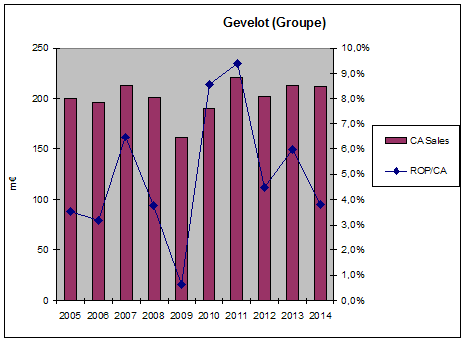
CA (Chiffre d'Affaires) = Sales
ROP/CA = EBIT margin


Breakdown between Extrusion and Pumps sectors
ROC = current operational result. MOP = current operational margin. Invest= investment
All figures (sales, results) are excluding intra-company transactions (more on that below).


The extrusion division is certainly not a "great" business: no competitive advantage, cyclical, heavy CAPEX, about 4-5% average (median value in the above table to be precise) operational margins. The outlook for the car industry seems recently better than the very difficult post 2008 years though.


The pump division has better margins (~10 %), less CAPEX requirements, but I've been unable to find the contribution of the oil/gas sector. Given the recent slump in oil prices, I wonder how to normalize earnings to account for the oil investment cycle.


5) Valuation
I've tried a sum of parts valuation, but one point that beats me is intra-company transactions (see table below). Just adding the estimated value of the extrusion and pumps branches without taking into accoung this internal transactions (-3 m€ in 2014) would lead to an overvaluation.


To get some idea, here's a very simplified  DCF calculation, with conservative assumptions (no growth, average 4% margin, 12% cost of capital).


6) Conclusion
So yes Gevelot is cheap, but operates in a difficult business with no competitive advantage.
The lack of liquidity, and indifference to minority shareholders probably explains some part of the discount.
In any case it will take patience to see if the excess cash is used wisely and will produce results. Given the recent historical performance I doubt the return on this capital will equal its cost for a company like Gevelot.
Link to a very recent relevant article (Investing in bad businesses Damodaran).

Disclosure : long ALGEV